...

Managing Stress and Anxiety: 4 Ways to Slow Down.

You cannot force your way through stress, and you cannot numb it away. The real work is helping your body come back down.

Some evenings, no matter how tired you are, your mind will not let go. You are home, but you are still back at the office, still turning over that one problem or something someone said. Your body stays switched on long after the day is done. When anxiety runs like that, rest does not come easy, and the stress quietly piles up. The good news is that coming down is a skill you can practice. Here is what actually helps.

Stress is more than a rough day

It is easy to treat stress as something to push through or wait out. But stress is not just a mood. It is your body’s alarm system doing its job. When your brain senses pressure, it floods you with energy to help you cope. That response is useful in short bursts. The trouble starts when the alarm never fully shuts off.


When stress stays switched on for days or weeks, it wears on your sleep, your focus, your patience, and your health. So the goal is not to get rid of stress completely. That is not possible, and it is not the point. The goal is to help your body return to calm on a regular basis, so the alarm gets a chance to rest.


You can often feel this in your body before you name it in your head. Your jaw is tight. Your shoulders sit up near your ears. You read the same email three times and still cannot take it in. None of that means something is wrong with you. It means your system has been running hot and needs a way to power down.

Why pushing through and numbing both backfire

Most of us reach for one of two strategies, and neither holds up for long. The first is powering through: ignoring the stress and hoping it passes on its own. The second is numbing it: reaching for a drink or a screen to feel a little less. Both leave the real tension sitting right where it was.


Powering through asks your body to stay on alert even longer, which is the opposite of what it needs. Numbing sends a quiet message that the feeling is too big to face, so it never gets handled. Either way, the stress does not actually leave. It just waits for you.


Relief comes from a different direction. Instead of fighting the stress or covering it up, you give your body simple, repeated ways to settle. The aim is not a perfect, stress-free life. It is a body that knows how to come back down after a hard day. Below are four ways to practice that.

How to manage stress and anxiety

None of these take much time, and none of them ask you to be perfect at it. They work because you repeat them, not because you do them flawlessly.

1. Build in real downtime

Your body needs a clear signal that the day is over and it is safe to relax. Without that signal, it tends to stay braced for the next thing.

  • Ask yourself a simple question: what actually helps me slow down? It might be a walk, gardening, yoga, or meditation.
  • Pick something that works for you, not what looks good on someone else’s list.
  • A slow walk somewhere green, like the gardens at Cantigny Park in Wheaton, often does more than another hour of scrolling.

2. Reach out instead of pulling away

Stress tells you to isolate. That is usually the worst thing you can do with it. Being around someone who feels safe can settle your nervous system in a way that willpower on its own cannot.

  • When the feelings will not lift, call a safe and caring person in your life.
  • Let them know in advance that you need support, not solutions. That helps them show up the way you actually need.
  • Connection is not a small thing. A large review in PLOS Medicine found that strong social ties are linked to better health, on a par with other well-known health habits.

3. Know the difference between unwinding and numbing

De-stressing does not mean switching yourself off. Using alcohol or other substances to feel calm tends to backfire.

    • Numbing might dull the stress tonight, but it blocks your body from truly coming down.
    • Over time, the stress tends to come back stronger, and the habit adds a problem of its own.
    • If you notice you are leaning on something just to relax, treat that as useful information, not a personal failing.

4. Give your body a daily reset

You do not need a free hour. Small resets, done often, teach your body to let go of tension.

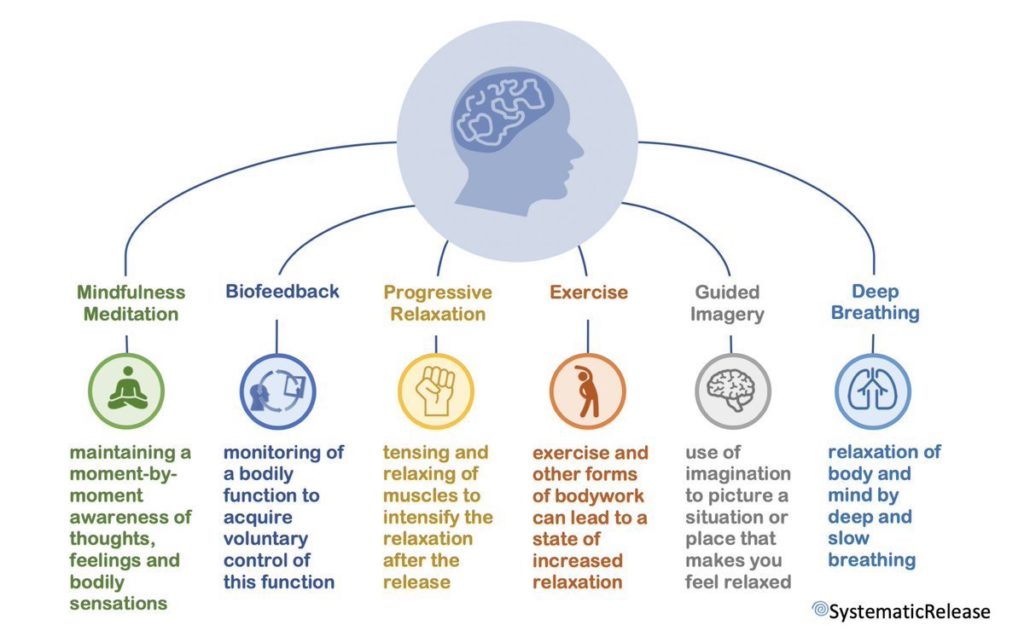
  • Try slow breathing: in for a count of four, out for a count of six, for a minute or two.
  • Step outside, stretch, or take a short walk between tasks instead of pushing straight through.
  • Put your phone down a while before bed, so your mind has room to wind down.

Done once, these barely register. Done most days, they slowly lower the baseline level of stress you carry around, so you are not starting each evening already on edge.

stress management tips

When stress needs more support

Everyday stress comes and goes. But sometimes it digs in, and no amount of unwinding seems to touch it. Too many people carry that weight quietly, never stopping to ask whether they need more help. That is not a character flaw either. It usually just means the load has grown bigger than the tools you have on hand, and that is exactly the point where outside support helps most.

Here is a simple way to tell. If your stress or anxiety is affecting your daily life, that is the sign. Watch for:

  • Sleep that is broken or hard to come by.
  • Noticeable changes in your appetite or energy.
  • Tension that is straining your relationships or your work.
  • A sense that you are coping alone and barely keeping up.

If any of that sounds familiar, reaching out is not a sign of weakness. It may be the wisest and bravest step you take. You can also read about the signs of burnout if your stress has started to feel like more than the usual.

There is no rule that says you have to wait until things fall apart. Many people come to therapy while they are still functioning, because they would rather not get to the breaking point first. Working with someone early often makes the path shorter and a good deal gentler.

Therapy for stress and anxiety at Panahi Counseling

At Panahi Counseling, we work with adults across Illinois who are tired of running on empty. Stress and anxiety rarely come from one source, and they rarely ease with one quick fix. The work is about understanding what keeps your alarm switched on, and building tools that help you come back down.


That might mean learning practical skills through anxiety therapy, looking at the thought patterns that keep stress spinning through cognitive behavioral therapy, or simply having a steady place to think things through. You can read a little about our therapists to see who might be a good fit.


Reaching out for the first time can feel like a lot, especially when you are already stretched thin. If you are curious about working with someone, you can start with a free 15-minute consultation. It is a low-pressure way to ask questions and see whether it feels right, with nothing expected beyond that conversation.

Share Post:

Home
Call us
Schedule
Therapists

We use cookies to enhance your experience. By continuing to browse, you agree to our use of cookies.